Putting this into three thousand words was not easy.
But somewhere between the research, the rewrites, and a few cups of chai, I realised something, some of the most powerful foods we talk about don’t look like food at all.
Take bamboo.
Most of us know it as mianzi, something you see in forests, fences, or maybe construction sites. Not necessarily something you’d expect on your plate. And yet, across continents, people have been eating bamboo shoots, healing with its leaves, and building entire livelihoods around it.
This is what makes the palatable grasses series so fascinating.
Because the deeper you go, the more you realise:
the line between food, medicine, and material… is thinner than we think.
So today, we’re stepping into bamboo -
a grass that feeds pandas, builds cities, and quietly finds its way into kitchens from China to Kenya.
Long before bamboo became scaffolding or eco-friendly toothbrushes, it was food.
In ancient China, over 7,000 years ago, communities were already digging up young bamboo shoots, boiling them, and turning them into meals. These early cooks may not have known the science, but they understood flavour, survival, and nourishment.
Over time, bamboo became deeply woven into Asian food culture:
In China, bamboo shoots (zhú s?n) symbolised vitality and renewal
In India, fermented bamboo found its way into gut-friendly dishes
In Japan, bamboo shoots became seasonal delicacies tied to spring: And then, like many crops, bamboo travelled.
Portuguese traders carried it across oceans. Colonial botanists experimented with it. Inventors like Edison even used bamboo to power early light bulbs.
But what’s interesting is this:
even as the world industrialised bamboo, many communities never stopped eating it.
Bamboo in Africa is not loud. It doesn’t dominate headlines. But it works.
East Africa – Where It Feels Closest to Home
In Kenya, bamboo (mianzi) was introduced mainly for environmental protection, riverbanks, erosion control, forest restoration.
But over time, something shifted. Communities began to ask: Can we eat this?
Today:
Women’s groups are learning how to pickle bamboo shoots
Farmers are harvesting young shoots for local markets
Nairobi shelves are slowly introducing bamboo-based products
In Ethiopia, bamboo is even more embedded in daily life. In the highlands, young shoots are harvested, boiled, dried, and sold—turning a forest plant into income.
Southern Africa – From Experiment to Enterprise
In places like South Africa and Mozambique, bamboo started as an experiment—paper pulp, construction material, export crop.
Some projects failed. But others evolved.
Now: Bamboo furniture is a growing industry
Eco-lodges use bamboo structures
Edible shoots are entering restaurant menus
West Africa – Slowly Finding Its Place
In Nigeria and Ghana, bamboo is still emerging as food.
But:
Urban growers are experimenting with shoots
Local dishes are beginning to incorporate it
Farmers see it as both a climate and income solution
Across Africa, bamboo represents something deeper:
- adaptation
- curiosity
- quiet innovation
It’s not just about importing a plant: It’s about making it ours.
Long before labs got involved, people already had their own understanding of bamboo.
What Tradition Taught
Bamboo shoots were eaten to “lighten the stomach”
Leaf decoctions were used for fever
Charcoal was taken for bloating
Sap was used for hydration and strength
These weren’t random uses, they came from observation over time. What Science Is Now Confirming
Modern research is slowly catching up:
Digestive health: Bamboo shoots are rich in fibre that supports gut bacteria
Heart health: Studies suggest mild reductions in LDL cholesterol
Antioxidants: Compounds like chlorogenic acid help fight oxidative stress
Skin & healing: Silica supports collagen and tissue repair
Safety Note (Important)
Fresh bamboo shoots must always be cooked.
They contain a natural compound (taxiphyllin) that can release cyanide if eaten raw.
- Boiling for 20–30 minutes makes them completely safe.
Bamboo is no longer just a forest plant.
It’s a full ecosystem of products:
Fresh bamboo shoots
Canned or vacuum-packed shoots
Pickled bamboo
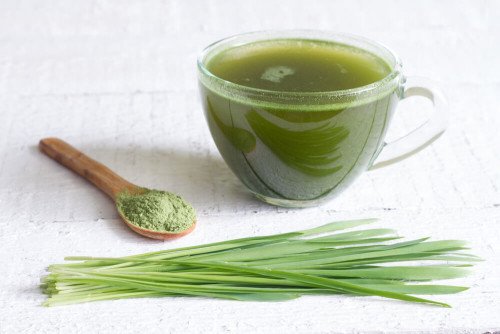
Bamboo tea (from leaves)
Bamboo charcoal powder
Eco-products (straws, cutlery, toothbrushes)
Construction materials
This is where bamboo becomes powerful:
- it feeds
- it builds
- it replaces plastic
- it supports livelihoods
If you walked into a modern kitchen today, bamboo might surprise you.
Simple Ways It’s Used
Stir-fries with garlic, ginger, and soy
Pickled bamboo with chilli and vinegar
Bamboo added to soups and broths
Blended into spreads or dips
Bringing It Closer Home
Think about it like this: If sukuma wiki can evolve…
if githeri can be modernised…then bamboo has a place too.
Quick DIY: Cooking Bamboo Shoots
Peel to the soft inner core
Slice thinly
Boil for 20–30 minutes
Rinse and cook as desired
That’s it.
Bamboo is one of those ingredients that challenges how we think about food.
It reminds us that:
food is not always obvious
tradition often comes before science
innovation sometimes starts quietly
From forests in Asia to farms in Africa, bamboo continues to evolve.
And maybe that’s the real story here. Not just what bamboo is… But what it becomes, depending on who is using it.
Add your reply
Replies