There are essays I've wanted to write for years.
Not ingredient blogs. Not recipes. Not nutrition guides.
Essays about the things food quietly carries that we rarely stop to talk about.
I just didn't know where to begin.
Ironically, it wasn't an ancient grain or a centuries-old recipe that gave me the entry point. It was oats.
Writing about oats opened a door I hadn't expected. And if I'm being honest, the confidence to walk through that door came after publishing my essay on Traditional Foods vs Comfort Foods. The conversations that followed reminded me that people aren't only hungry for recipes. They're hungry for the stories behind them.
So this month, under our theme Food as Social Memory, I want us to ask a different kind of question.
Can a dish remember?
I think it can.
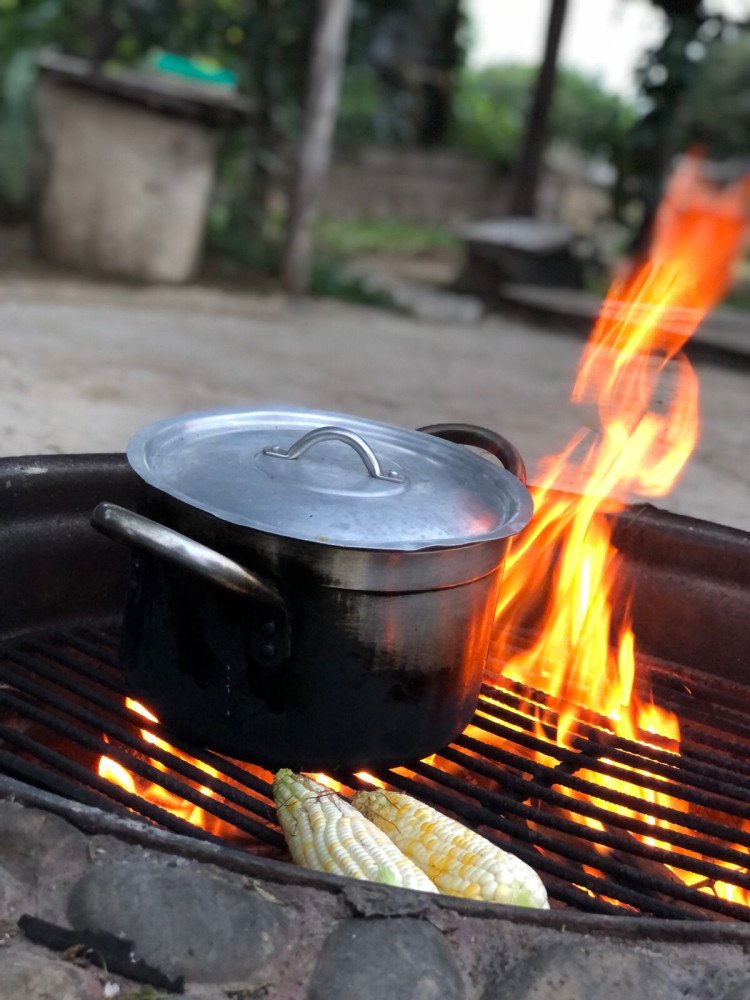
Maybe not in the way people remember birthdays or names. But I think food remembers people, places, seasons, migrations, celebrations, grief, love, and the quiet decisions families make around a cooking pot.
And perhaps that's how oral history survives.
When does a food become "ours"?
One question has followed me for years as I've explored African food:
How does a community begin to see itself through food?
Is identity created through ingredients?
Or is it created through what we repeatedly do with those ingredients?
Think about it.
A new ingredient enters a community. Someone buys it. Someone tastes it. Someone experiments with it. Someone changes the recipe because that's what was available in the kitchen that day.
The next neighbour learns that recipe.
A sister carries it into another household after marriage.
Children grow up eating it.
Years later, nobody remembers that it was ever new.
The ingredient has become part of the community's identity.
That fascinates me.
Because somewhere between the first person who cooked it and the child who inherited it, memory was created.
Oats didn't begin here. But stories did.
Take oats.
We recently explored oats in the Food Journal because of a very personal experience I had while breastfeeding. At the time, oats were simply the only food I could tolerate eating. I had no idea they were widely known as a galactagogue in many cultures.
That discovery sent me looking for answers.
The more I researched, the more I realised something bigger.
Oats didn't begin in Africa.
Yet today, oats live comfortably in countless African homes.
They're breakfast.
They're porridge.
They're blended into smoothies.
They're baked into mandazi-inspired creations, biscuits, pancakes, granola, and family recipes that didn't exist a generation ago.
Some communities grow oats.
Others buy them from supermarkets.
Others mix oats with millet flour, sorghum flour, bananas, sweet potatoes, or groundnuts to create something uniquely their own.
Somewhere along the way, oats stopped being an imported grain.
They became familiar.
That's social memory in action.
I keep thinking about our grandmothers
This is the part I can't stop imagining.
Our grandmothers may have been the first generation in some families to bring oats into the kitchen.
Imagine that moment.
A bag of oats sitting beside millet.
A woman wondering whether this strange grain could become porridge.
Did she compare it to 'uji wa wimbi'?
Did she like the taste immediately?
Did the children refuse it the first time?
Did she quietly add millet because oats alone didn't taste like home?
Did she realise she was inventing a brand-new family recipe?
We'll probably never know.
And that's the bittersweet thing about oral history.
Some stories disappear with the people who carried them.
Recipes are conversations across generations
I've started looking at recipes differently.
A recipe isn't just instructions.
It's a conversation.
Someone says, "Use millet instead."
Someone else says, "Add coconut milk."
Another person says, "We always roast the flour first."
Nobody writes it down.
Nobody calls it innovation.
It's simply repeated until repetition becomes tradition.
That's how communities absorb food.
Not through announcements.
Through everyday cooking.
I think that's why African food is so beautifully layered. The recipes we inherit are full of tiny edits made by people whose names we'll never know.
Every community adopts food differently
One of my favourite things about studying African food is discovering that there is rarely just one recipe.
Even something as simple as porridge changes from community to community.
Across East Africa, millet porridge can be fermented, sweetened, salted, enriched with milk, or blended with other grains.
In West Africa, grains become fermented drinks, breakfast porridges, steamed foods, and snacks.
Southern African kitchens transform grains into soft porridges, breads, and ceremonial meals.
The ingredient may travel.
The memory it creates is always local.
That's why I don't believe communities simply borrow food.
They translate it.
They give it a new language.
A new taste.
A new story.
Maybe this is why documentation matters so much
This thought has stayed with me ever since the oats blog.
We inherited knowledge.
Now it's our turn to leave some behind.
Our grandmothers may have carried recipes in memory.
Some never had notebooks.
Some never had cameras.
Some measured ingredients with hands instead of cups.
Many of their stories live only because someone remembers them.
We have something they didn't.
We can document.
We can write.
We can photograph.
We can record voices.
We can preserve recipes before they're forgotten.
That's part of why Jikoni Palatables exists.
Not simply to publish recipes, but to create a living archive of African food knowledge.
We owe future generations more than recipes:
We owe them stories.
The story of how oats became breakfast in one household.
The story of the first time someone mixed oats with millet flour because that was what was available.
The story of recipes that failed before they became family favourites.
The story of ingredients that arrived through migration, trade, supermarkets, neighbours, marriages, and curiosity.
The story of mothers who discovered oats helped them nourish their babies.
Maybe somewhere, years from now, a new mother will search for oats and find that story.
And maybe she'll feel a little less alone.
Isn't that memory becoming nourishment?
The dishes we inherit. The dishes we leave behind.
Food has always travelled.
Across oceans.
Across borders.
Across marriages.
Across generations.
But it never travels unchanged.
Every kitchen leaves fingerprints on it.
Every family adds something.
Every community remembers something different.
That's why I believe a dish can remember.
Not because the pot has memory.
But because: people keep telling the story every time they cook it.
So as we continue documenting African ingredients, forgotten grains, family recipes, and everyday meals, I hope we also document the moments that created them.
Because one day, our recipes will become someone else's oral history.
And perhaps that is the greatest inheritance a kitchen can leave behind.

Add your reply
Replies