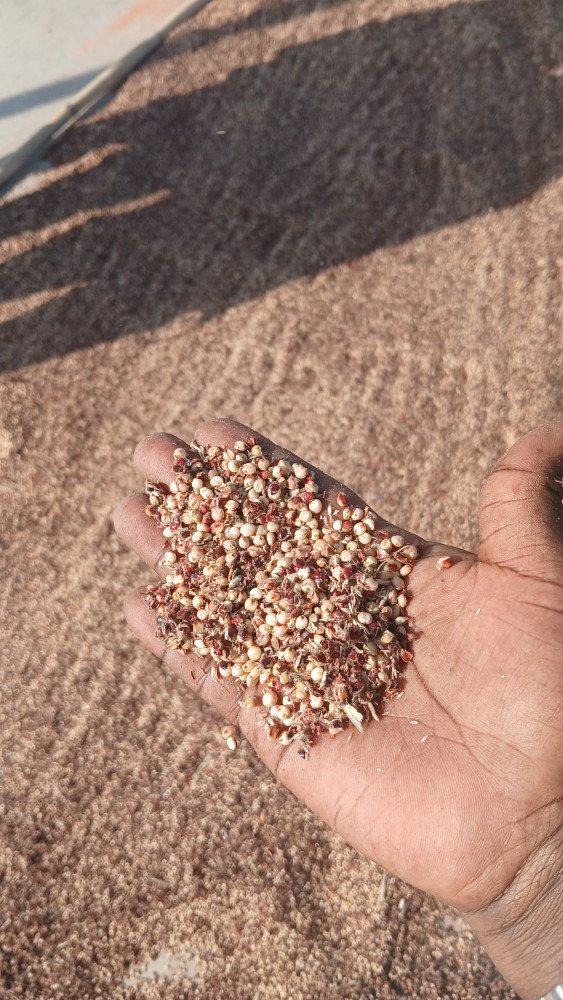
There’s something comforting about ucuru wa mukio (fermented porridge) ; And especially the one made from this particular grass...
Not flashy comfort.
Not expensive comfort.
Let me state, traditional comfort.
Just real comfort.
Whether it is served is traditional ceremonies: Ruracio (Weddings), Gucugia mwana (Baby showers) or even during breakfast..
The kind that sits warm in your stomach during cold mornings.
The kind grandparents trusted before cereal boxes and protein shakes arrived.
The kind you don’t outgrow.
What fascinates me most isn’t just the taste.
It's the diversity.
Every African community seems to have its own relationship with sorghum.
Some ferment it.
Some roast it.
Some turn it into beer.
Others into porridge, ugali, snacks, flour, or medicine.
Even the texture changes from region to region.
This farmer has definitely mastered how to grow each specie and distribute.
He's one of the resources we used to come up with this part of the series.
That curiosity sent me down another rabbit hole in the Palatable Grasses series.
And honestly?
Mtama turned out to be one of the most fascinating grasses I’ve researched so far.
This is the story of the African grain that survived droughts and crossed oceans:
Imagine this, the edge of the Nile near present-day Sudan around 8,000 BCE.
The climate is changing.
Wetlands are shrinking.
People are searching for plants tough enough to survive harsh conditions.
Then someone notices a grass.
Small reddish grains.
Hardy stems.
Still standing when other plants fail.
That grass was sorghum.
One of humanity’s oldest drought-resistant crops.
Unlike wheat, sorghum did not demand perfect weather.
It adapted.
Quietly.
Relentlessly.
And because it survived difficult climates, people carried it everywhere.
So, lets retrace it's Ancient footprints:
Sudan & the Sahel
Early African communities selected sorghum for:
bigger seeds
sweeter stems
better drought resistance
richer colours
Over time, sorghum evolved into many forms:
white, red, bronze, brown, even deep purple-black varieties.
India
By around 2,000 BCE, Indian Ocean trade routes carried sorghum eastward.
Indian communities used it for:
flatbreads
porridge
fermented drinks
China
Sweet sorghum varieties became important for:
syrup production
alcohol
Even today, sorghum remains central to famous Chinese liquors like baijiu.
Europe
The Moors introduced sorghum into parts of Spain during periods of wheat shortages.
It became survival food during famine years.
Today sorghum feeds:
- households
- breweries
- livestock systems
- gluten-free industries
- biofuel production
And while countries like the United States and Brazil industrialised sorghum production…
Africa never stopped treating it as culture. Here's Africa’s sorghum story: Where the grain becomes identity.
Sorghum is not just grown in Africa. It belongs here.
East & Central Africa
Kenya
In many Kenyan homes, mtama appears as:
uji (ucuru wa mukio)
ugali
flour
mixed fermentation blends
Along the coast, mtama ugali remains a drought-season staple.
Today, some Nairobi wellness cafés are experimenting with sorghum smoothies and juices using sprouted-grain.
Uganda
Communities carried roasted sorghum balls mixed with sesame during long journeys and conflicts because they stored well and provided energy.
Commercial breweries now use sorghum in local beers like Eagle Lager.
Rwanda & Burundi
Traditional sorghum beer remains deeply tied to ceremonies, gatherings, and hospitality.
In some rural areas, fermentation practices are still passed down through generations of women.
Ethiopia
Sorghum appears in:
injera
tella beer
areki spirits
Red sorghum injera has a beautiful earthy flavour and slightly burgundy colour.
Southern Africa
South Africa
Before maize became dominant, sorghum was already feeding communities around Mapungubwe.
Today, mabele porridge remains deeply nostalgic food for many households.
Traditional sorghum beer is still widely consumed.
Zimbabwe
Mapfunde sadza continues to serve as drought-resistant food security in rural communities.
Chibuku, the famous cloudy sorghum beer, remains one of Southern Africa’s most recognisable grain beverages.
Malawi
Sorghum porridge mixed with groundnuts is commonly used for child nutrition.
Sweet sorghum stems are sometimes chewed almost like sugarcane.
Botswana
Bogobe, sorghum porridge often paired with sour milk, remains an important traditional meal.
West Africa
Nigeria
Sorghum, often called guinea corn, is everywhere. It's called Okababa, Dawa, Asara and Igbili
Used for:
burukutu beer
ogi pap
kunun-zaki breakfast drinks
porridges
fermented foods
Street vendors still sell warm sorghum drinks early in the morning.
Ghana
Koko vendors often blend millet and sorghum together for richer texture and flavour for Akasa. Sorghum drink, zomkom, some part use sorghum flour to make the traditional Masa/Waina. Pito is the beer brewed from white sorghum.
Sorghum snacks are increasingly entering modern packaged-food markets, for example popped sorghum, Sorghum crackers and crisps.
Senegal
Sorghum couscous and baobab-sorghum drinks continue growing in urban wellness spaces.
Now we leap from fermentation pots to modern nutrition science.
African communities understood sorghum long before laboratories did.
Traditional uses
Fermented porridge for digestion
Malt syrups for coughs
Sorghum beer for ceremonies
Sprouted grain tonics
Ash poultices for skin conditions
These weren’t “wellness trends.”
They were daily life.
What science now confirms
1. Antioxidant-rich grain
Red and black sorghum varieties contain anthocyanins — antioxidants also found in berries.
Some studies show exceptionally strong antioxidant activity.
2. Blood sugar support
Sorghum digests more slowly than many refined grains.
That slower digestion may help reduce blood-sugar spikes.
3. Gut-friendly fermentation
Traditional fermented sorghum foods naturally support beneficial bacteria growth.
Communities knew this long before probiotics became fashionable.
4. Gluten-free grain
Sorghum is naturally gluten-free, making it valuable for people avoiding wheat.
5. Fibre & heart support
The grain contains fibre and plant compounds linked to cholesterol support and digestive health.
6. Bone-supporting minerals
Sorghum contains:
- magnesium
- phosphorus
- iron
- zinc
Important minerals for growth and development.
Safety notes
Sorghum is generally safe and highly nutritious.
However:
Some darker varieties contain tannins that may slightly reduce iron absorption if eaten excessively without dietary variety.
Diabetics should still monitor portions even though sorghum has a lower glycaemic impact than some refined grains.
Fermented foods should always be prepared hygienically.
Balance still matters.
From field to fork, how people eat sorghum today;
One reason sorghum survived this long is because it adapts beautifully.
You can:
- ferment it
- roast it
- pop it
- malt it
- mill it
- brew it
- sprout it
Very few grains are this flexible.
Uji wa mtama
Ucuru wa muhia
Sorghum ugali
Ogi baba
Tuo dawa
Kunun dawa
Zomkom
Akasa
Koko
Tella
Pito
Burukutu
Bogobe
Injera
Mabele
Motogo
Ting ya mabele
Modern kitchen ideas
Purple sorghum ugali
Red sorghum flour creates naturally deep-coloured ugali that surprises children the first time they see it.
Sorghum popcorn
Tiny kernels pop beautifully in dry heat.
Crunchy, nutty, addictive.
Gluten-free baking
Sorghum flour works surprisingly well in:
pancakes
muffins
brownies
flatbreads
Sorghum smoothies
Sprouted sorghum blended with:
pineapple
ginger
mango
Earthy but refreshing.
Malt drinks
Traditional sorghum malt remains one of Africa’s most underrated flavours.
Simple DIY sorghum ugali
Ingredients
1 cup sorghum flour
3 cups water
Method
Mix flour with 1 cup cold water.
Boil remaining water.
Slowly add the slurry while stirring.
Cook on low heat.
Stir until thick and smooth.
Serve with:
sukuma wiki
nyama stew
kunde
Simple food.
Deep history.
Finally...
Sorghum survived because it learned how to survive difficult places.
Dry seasons.
Poor soils.
Long journeys.
Changing climates.
And maybe that’s why so many African communities trusted it.
Mtama is not trendy because of marketing.
It is respected because it endured.
From ancient Sudanese settlements to modern gluten-free kitchens, sorghum continues doing what it has always done:
feeding people steadily.
And honestly?
That may be the most impressive superpower any food can have.

Add your reply
Replies